
Composite Utility Poles Offer Long-Term Protection Against Weather, Pests, and Corrosion, New Case Study Finds
This article is a preview of a full case study published by Resilient Structures in their newsletter, News On The Inside. The full article is linked below.
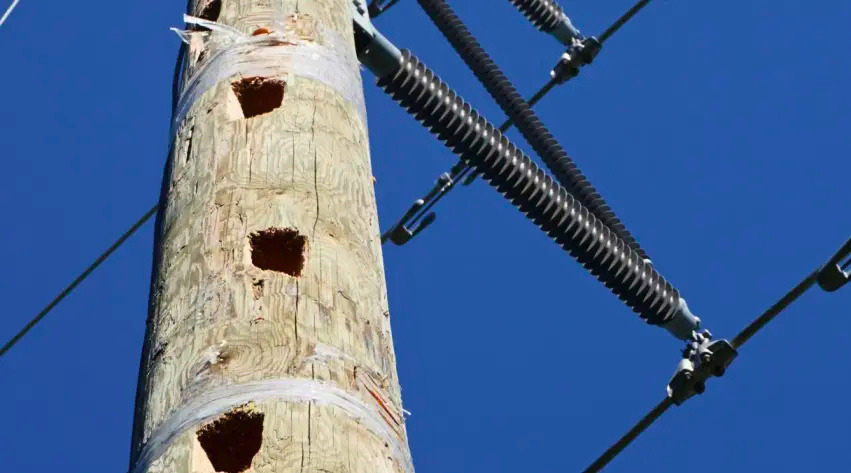
A standard wooden utility pole with severe woodpecker damage.
Utility companies across the United States are re-evaluating pole materials as environmental stress continues to shorten the service life of traditional wood poles. A new case study from composite pole manufacturer Resilient Structures highlights why wood poles — designed to last 40 years — are often failing well before the 30-year mark, and how composite alternatives are helping utilities avoid the problem entirely.
According to the case study, pole degradation is being driven by a combination of factors, including woodpecker and carpenter ant damage, wildfire exposure, high winds, ice storms, and coastal or wetland conditions that accelerate rot, corrosion, and spalling in wood, steel, and concrete poles alike. In one striking example cited in the report, a utility documented damage to more than 100,000 poles from woodpecker activity over a nine-year period, with over 10% requiring replacement — including poles that were only two years old.
Composite poles, built from a UV-protected polyurethane resin and E-glass fiber roving, are presented as a solution that removes these vulnerabilities altogether. Because the material doesn't rot, corrode, or attract pests, utilities using composite poles report reduced maintenance needs, faster inspections, and pole replacement frequencies cut in half compared to conventional materials.
For utilities managing aging infrastructure or planning grid hardening projects in high-risk environments — from wildfire zones to coastal corridors — the findings offer a data-backed look at how material choice affects long-term reliability and cost.
Read the full case study, including the complete evidence and findings, on the Resilient Structures website: